
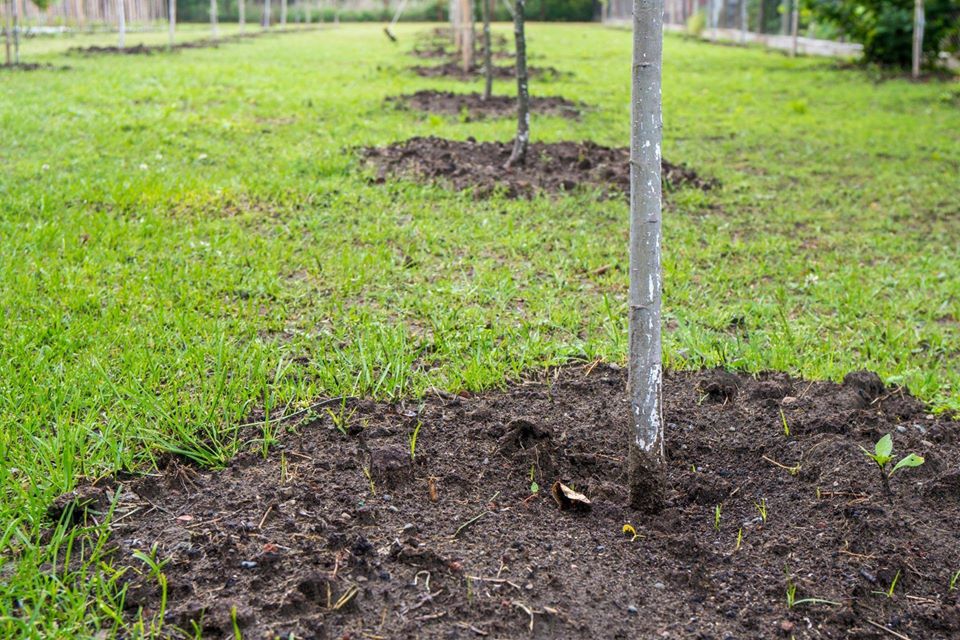
Fall is when trees in our area prepare themselves for winter. They’re dropping leaves, pushing energy into the roots, and about to take on wet soil, wind, and the first winter storms. A short walk around the yard now can help you spot potential issues before winter arrives. Here’s the checklist we use on fall property visits before the ground freezes.
Water before the ground freezes
September and October can still run dry. Trees need adequate moisture going into winter, particularly newly planted trees and those that have experienced a dry season.
- Newly planted trees: a deep soak about once a week until the ground freezes
- Established trees: water only if it’s been dry
- Water out at the drip line, not against the trunk
- Stop once the soil stays cold and wet
Don’t flood a tree that’s already sitting in a low, soggy corner. A lot of yards here hold water.
Clear the leaves, but protect the trunk.
Leaves can provide useful organic matter around trees when managed properly
- Rake them off the lawn if they mat the grass
- Keep leaves and mulch a few inches away from the trunk to help protect the bark and avoid excess moisture around the base.
Prune with a purpose — don’t top
The best time to prune depends on the tree species and the type of pruning needed. For many trees, removing problem wood before winter can be beneficial.
Consider having a tree evaluated if you notice:
- Dead, hanging, or cracked limbs over the house, driveway, or a play area
- Branches on the roof or growing near a service line
- Crossing limbs and weak attachments you can see from the ground
- Trees that have been affected by drought, insects, or other damage
- Tree work that requires specialized equipment, such as a bucket truck or crane
Avoid topping trees such as maple or oak to reduce their size. It can encourage weakly attached new growth and create additional problems over time.
Look while the leaves are still on
Once the canopy is bare, some problems are harder to read. Walk the lot now. Watch for:
- Thin crowns on ash
- Odd banding or puckering on beech leaves
- White wool on hemlock twigs
- A new lean, soil lifting at the base, or a crack in the trunk
- Big deadwood in oak, maple, or pine hanging over something you care about
Not every sign means a tree needs to come down. Some issues may call for pruning or monitoring while others deserve a closer professional evaluation.
Plant now if you’re going to plant
Early to mid-fall is one of the better times to put a tree in the ground here. Soil is still warm, the air is cooler, and roots can move before winter.
Choose a species that is well suited to our climate and give it enough room to mature. Consider the tree’s mature size and the space available before planting.
Get ahead of storm season
Fall is a good time to look for potential problems before the winter weather arrives. Before the first real storm:
- Take down hanging deadwood over the roof
- Note any tree that’s started to lean since last year
- Snap photos of problem trees now – they may be useful if you need them later
- If you have a tree you’re concerned about, it’s best to address it before severe weather arrives.
After a storm, stay out from under hanging limbs. Don’t cut a tree that’s on a line or pinned against the house.
When it’s worth calling a professional
Consider having a tree evaluated if a large limb is over the house or a walkway you use every day, the tree is leaning toward a structure, you need a stump ground so you can seed or replant, or you want the wood chipped and the site cleaned.
Mike’s Professional Tree Service has been serving Rhode Island homeowners and businesses since 1992. Under new ownership as of 2026, our experienced team continues that tradition with pruning, tree removal, stump grinding, land clearing, brush chipping, and emergency tree services.
If you want someone to walk the lot before the leaves are gone, request a free estimate at mikesprotreeinc.com or call the office!
Recent Comments